Key Takeaways
- Regular roof care can help Connecticut property teams find small defects before they interrupt operations.
- A written roof file makes inspections, repair decisions, warranty reviews, and budgeting more organized.
- Drainage, seams, flashing, rooftop equipment, and interior moisture signs deserve consistent attention.
- Connecticut roofs must be prepared for changing conditions, including heavy rain, wind, summer heat, falling leaves, snow, and freeze-thaw cycles.
- Safe roof access, documentation, and timely repairs are central to a dependable maintenance program.
Table Of Contents
- Why Commercial Roof Maintenance Matters
- How To Build A Maintenance Plan
- Commercial Roof Inspection Checklist
- Common Problems That Lead To Leaks
- Seasonal Roof Care In Connecticut
- Roof Maintenance And Energy Use
- Roof Safety Rules
- Repair Or Replace?
- How To Budget For Roof Care
- Frequently Asked Questions
- Final Thoughts
For Connecticut offices, warehouses, schools, retail centers, and multifamily properties, the roof is part of the building’s daily operating system. Working with a qualified commercial roofing contractor in Connecticut can help property managers identify concerns before water reaches inventory, ceiling systems, electrical areas, or occupied spaces.
Local conditions make consistency important. A roof may handle wind-driven rain in one season, leaf buildup in another, and snow, ice, or repeated freeze-thaw conditions in winter. A practical 2026 maintenance plan gives building teams a clear way to inspect, document, prioritize, and address those risks.
1. Why Commercial Roof Maintenance Matters
A commercial roof in Connecticut should not be treated as a set-it-and-forget-it building feature. A small opening at a seam, penetration, flashing detail, or drain area can allow moisture to travel beyond the visible leak location. Planned inspections are generally less disruptive than responding to an active leak during business hours or after a nor'easter or severe storm.
2. How To Build A Maintenance Plan
Start with a roof file for every building or roof section. Record the approximate installation date, roof material, known repairs, warranty information, permits, inspection reports, invoices, and photographs. A simple rooftop map should mark drains, scuppers, skylights, curbs, vents, HVAC units, access paths, and other penetrations.
For buildings considering long-term material choices, metal roofing may be part of the conversation, particularly where slope, drainage, appearance, and equipment needs support that system. The appropriate choice depends on the building design, existing structure, budget, and installation details.
Set Dates And Rank Findings
Schedule professional roof inspections at least twice per year, then add reviews after severe wind, hail, heavy rain, major snow events, or rooftop equipment work. Sort findings into three categories:
- Urgent: Active leaks, exposed insulation, unsafe areas, major punctures, or blocked drainage.
- Near-term: Open seams, deteriorated sealant, loose flashing, loose fasteners, or recurring ponding.
- Monitor: Surface aging, fading, isolated wear, or minor cosmetic concerns that do not yet affect performance.
3. Commercial Roof Inspection Checklist
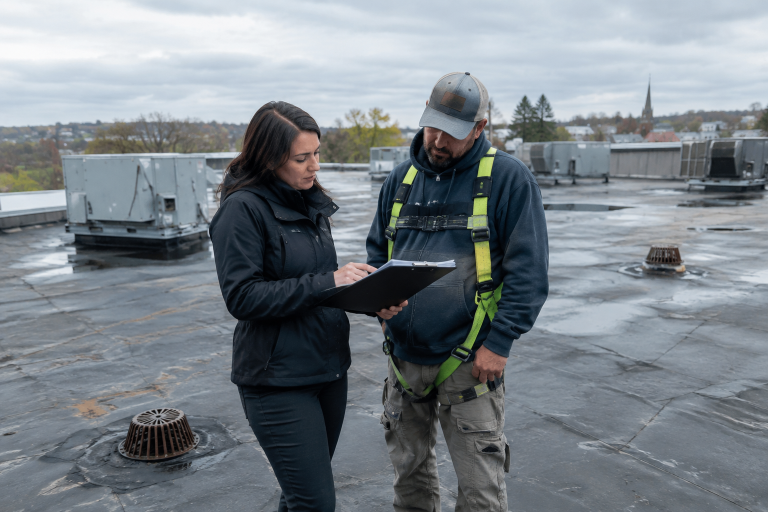
Roof access should be limited to trained, authorized personnel. During a visual review, document the location and condition of each concern with photographs and notes. Check for:
- Standing water that remains after rainfall.
- Debris in drains, gutters, scuppers, and downspouts.
- Gaps, lifting, or separation at seams and membrane edges.
- Damaged flashing around pipes, skylights, vents, and equipment curbs.
- Blisters, cracks, punctures, rust, damaged coatings, or loose fasteners.
- Movement or failed seals at parapet walls and coping.
- Interior ceiling stains, peeling finishes, damp insulation, or musty odors near upper floors.
4. Common Problems That Lead To Leaks
Drainage And Foot Traffic
Leaves, sediment, trash, and damaged drain components can slow drainage and leave water where it does not belong. Connecticut’s autumn leaf drop makes routine cleaning especially useful. Foot traffic can also damage a roof membrane when service teams repeatedly cross the surface without designated walk pads or pathways.
Seams, Sealants, Equipment, And Storm Debris
Open seams and aging sealants are common trouble points, particularly at penetrations and roof edges. HVAC service can create problems when tools are dragged, materials are dropped, or equipment supports are disturbed. After storms, branches and loose debris should be removed safely, while punctures, displaced materials, and damaged flashing should be assessed promptly.
5. Seasonal Roof Care In Connecticut
- Winter: Clear drainage routes before freezing weather, monitor vulnerable areas after freeze-thaw cycles, and follow a site-specific snow and ice plan.
- Spring: Remove winter debris, inspect for wind-related damage, clean drainage components, and look inside for moisture that may have gone unnoticed.
- Summer: Review sealants and surface condition during warm weather, inspect areas around serviced HVAC equipment, and investigate unusual increases in cooling demand.
- Fall: Remove leaves and organic matter, confirm downspouts are clear, and complete planned repairs before colder, wetter conditions make work more difficult.
6. Roof Maintenance And Energy Use
Roof color, surface condition, insulation, and assembly design can influence heat transfer into a building. Reflective surfaces may be useful for some Connecticut properties, but color alone does not determine energy performance. Compare projected benefits with insulation levels, heating needs, roof condition, local code requirements, and the cost of installation and upkeep.
7. Roof Safety Rules
Roof inspections are not casual walkthroughs. Wet membranes, deteriorated surfaces, roof openings, electrical equipment, ladders, wind, and exposed edges can create serious hazards. OSHA’s guidance for roof inspection and repair work emphasizes controlled access, fall protection, safe ladder practices, and protection for people below overhead work. Stop work when conditions are unsafe, and use trained professionals for detailed inspections and repairs.
8. Repair Or Replace?
A repair may be appropriate when damage is isolated, and the broader roof system remains sound. Replacement deserves consideration when repairs are frequent, moisture is widespread beneath the surface, drainage problems cannot be resolved with targeted work, or the system is nearing the end of its practical service life. For Connecticut properties facing repeated winter ice and heavy seasonal rain, compare repair and replacement options based on cost, expected performance, disruption to occupants, energy goals, safety needs, and future maintenance risk.
9. How To Budget For Roof Care
Instead of relying only on emergency spending, build roof care into the annual property budget. Organize planned expenses as a simple list:
- Routine inspections and cleaning: Schedule for spring and fall, with a facilities lead or property manager assigned.
- Minor repairs: Reserve funds for sealants, flashing, drains, walk pads, and small membrane repairs.
- Capital planning: Track the condition and age of roof sections, insulation, drainage improvements, coatings, and replacement needs.
- Storm response: Keep a contingency allowance for temporary protection, assessment, and urgent repairs.
10. Frequently Asked Questions
How Often Should A Commercial Roof Be Inspected?
Twice-yearly professional inspections are a useful starting point, with additional checks after major weather events, construction, or rooftop equipment service.
What Is The First Sign Of A Commercial Roof Leak?
Ceiling stains, unexplained dampness, musty odors, bubbling paint, and changes to drywall or insulation can signal moisture intrusion.
Does Ponding Water Always Mean Replacement Is Needed?
No. Ponding can result from clogged drainage, uneven surfaces, insulation movement, or design issues. The underlying cause should be identified before selecting a repair or replacement approach.
Final Thoughts
Connecticut commercial roofs perform best with steady attention rather than last-minute action. A documented inspection calendar, clean drainage routes, protected access paths, timely repairs, and safe work practices can help reduce downtime and support stronger long-term property decisions in 2026.

Leave a Reply