The Art of Fine Jewelry and Watch Repair
The journey of an heirloom, whether a delicate pendant or a robust timepiece, is often long and storied. As guardians of these treasures, we understand that their continued beauty and functionality depend on the specialized art of fine jewelry and watch repair. This discipline demands an extraordinary blend of craftsmanship, an unwavering eye for detail, and the precise application of advanced tools and techniques. It's a field where material integrity is paramount, as understanding the unique properties of different metals and gemstones is crucial for successful restoration.
Over decades, pieces can suffer from metal fatigue, where repeated stress causes microscopic cracks or weakening in the structure. This is particularly true for rings that endure daily wear or watch cases exposed to various environments. Structural restoration goes beyond mere cosmetic fixes; it involves meticulously rebuilding or reinforcing weakened components to ensure the item's longevity and stability. This comprehensive approach ensures that the heirloom not only looks its best but is also robust enough to be passed down through future generations.
Why Professional Fine Jewelry and Watch Repair Matters
Entrusting your cherished possessions to professional jewelers and horologists is not merely a preference; it's a necessity for preserving their value and integrity. The intricate nature of luxury items requires expertise far beyond what a general repair shop can offer. For instance, micro-soldering techniques are essential for repairing delicate components without causing further damage, a skill honed over years of practice. Similarly, prong retipping is a common yet critical procedure for rings, preventing precious gemstones from becoming loose or falling out. Professionals meticulously rebuild worn prongs, ensuring the stone's secure setting.
Stone tightening is another vital service, addressing the natural loosening of gems over time due to wear or impact. Experts can carefully adjust the setting to secure the stone without compromising its brilliance or the surrounding metalwork. When it comes to more personalized needs or comprehensive overhauls, finding a service provider that offers both custom design and on-site repairs is invaluable. Such establishments provide a holistic approach, ensuring that your heirlooms receive the meticulous attention they deserve, from routine maintenance to complex restorations, guaranteeing their heirloom longevity.
Maintaining Luxury Timepieces: The TAG Heuer Formula 1 Case Study
Among the myriad of luxury timepieces, the TAG Heuer Formula 1 collection stands out as a testament to enduring design and robust performance, deeply rooted in the thrilling world of motorsport. Introduced in 1986, the Formula 1 collection was a pivotal release for TAG Heuer, marking the first watch line launched after the TAG Group's acquisition of Heuer in 1985. Its initial design, inspired by the vibrant and accessible aesthetic of Swatch watches, featured colorful fiberglass cases, making it an instant hit and an entry point for many into luxury sports watches.
Over the decades, the collection has undergone significant evolution, transitioning from its initial fiberglass construction to more sophisticated materials. A major redesign in 2004 saw the introduction of durable stainless steel cases, a move that solidified its reputation for resilience. These watches are engineered for action, boasting impressive water resistance up to 200 meters. This makes them suitable for a wide range of water sports, not just the high-octane environment of Formula 1 racing. However, maintaining this water resistance requires regular attention from skilled watchmakers, including meticulous gasket replacement and careful case resealing during servicing.
Servicing Complex Movements and Solargraph Technology
The heart of any watch lies in its movement, and the TAG Heuer Formula 1 collection has housed a variety of calibers, reflecting its evolution. Early models predominantly featured reliable quartz movements, offering precision and durability. However, since 2012, many models have incorporated sophisticated automatic movements, often based on modified ETA calibers. A prime example is the Calibre 16, which is built upon the robust Valjoux 7750, a renowned chronograph movement known for its reliability and intricate mechanics. Servicing such complex movements requires specialized knowledge and tools to ensure all gears, springs, and levers are perfectly aligned and lubricated. Other automatic options include the Calibre 5, 6, and 7, each offering distinct functionalities like date, day-date, or GMT complications.
A significant innovation in the collection arrived with the 2025 Solargraph models. These watches represent a leap forward in sustainable timekeeping, utilizing solar-powered quartz movements, specifically the TH50-00 caliber. These cutting-edge movements offer an impressive power reserve of up to 10 months on a single full charge, harnessing light energy through their specially designed dials. While quartz movements generally require less frequent servicing than their mechanical counterparts, the Solargraph models still benefit from periodic checks. This includes assessing the efficiency of the solar cell, inspecting the rechargeable battery cell, and ensuring precise movement calibration. Should a component fail, specialized diagnostics and careful replacement ensure the watch continues to function flawlessly, leveraging its advanced solar technology.
Essential Steps in Fine Jewelry Restoration
Restoring fine jewelry is a delicate dance between preserving its original essence and bringing it back to its former glory. The process often begins with thorough cleaning. Ultrasonic cleaning, for instance, uses high-frequency sound waves to dislodge dirt and grime from intricate crevices, leaving the piece sparkling without harsh chemicals. This is often followed by meticulous polishing, where skilled hands use various buffs and compounds to remove surface scratches and restore the metal's lustrous shine.
For more significant repairs, advanced techniques like laser welding have revolutionized jewelry restoration. This method allows for incredibly precise repairs, minimizing heat transfer and preserving delicate gemstones or intricate engravings that traditional torch soldering might damage. When dealing with different metals, such as platinum vs. gold, understanding their unique properties is critical. Platinum, being denser and more durable, requires different handling and welding temperatures compared to gold, which comes in various karats and alloys. A skilled artisan knows how to work with each metal to achieve seamless repairs and lasting strength.
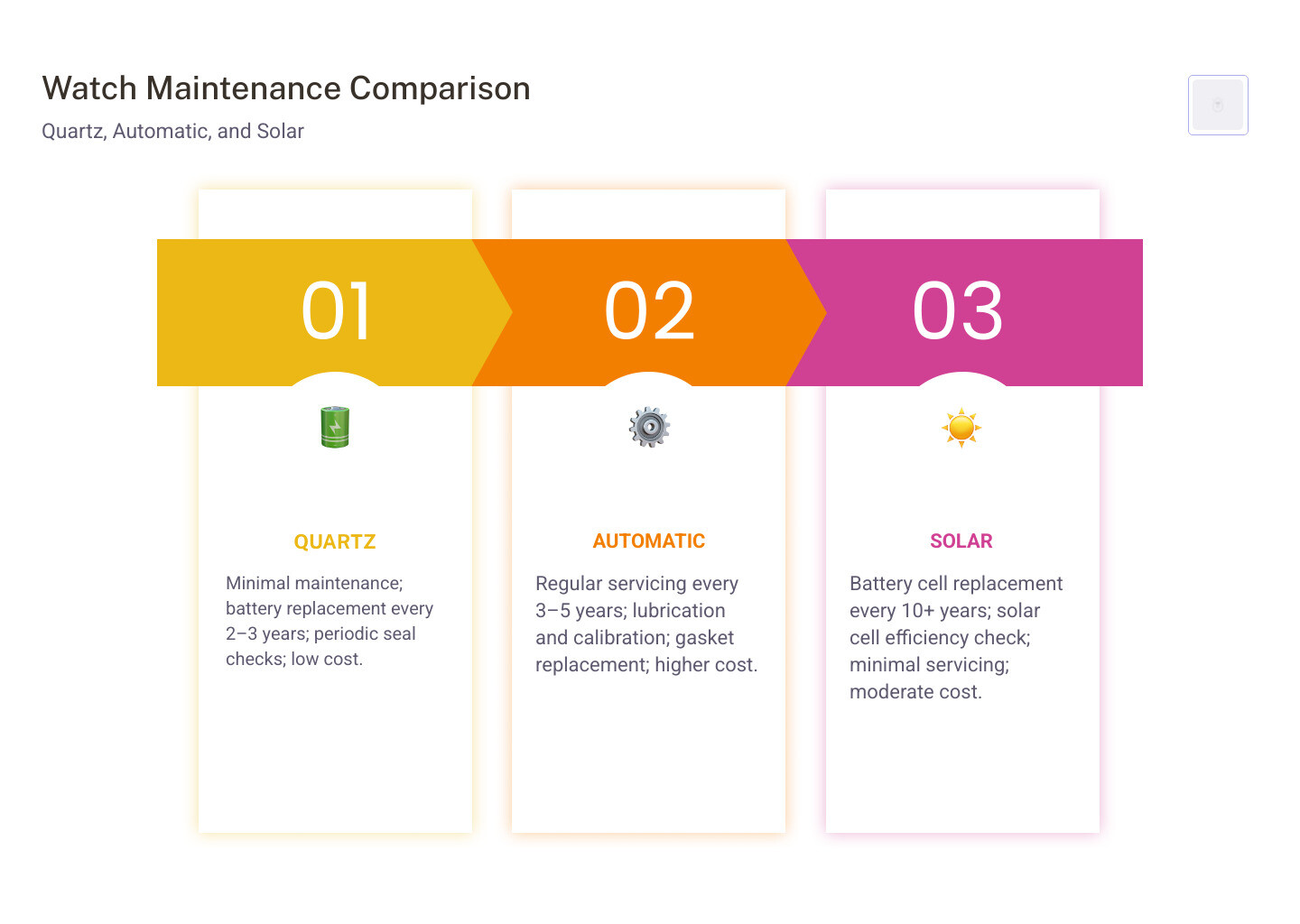
To further illustrate the varying needs of different timepieces, here is a comparison of maintenance requirements:
Choosing the Right Specialist for Fine Jewelry and Watch Repair
The decision of where to entrust your precious heirlooms for repair is paramount. It requires careful consideration of the specialist's qualifications and the facility's capabilities. For watches, seeking a horologist with certified credentials is vital. Certifications from reputable institutions ensure that the watchmaker has undergone rigorous training in the complex mechanics of luxury timepieces. Similarly, for jewelry, look for jewellers with established credentials and a proven track record in fine jewelry repair and restoration.
A reputable specialist will always begin with comprehensive diagnostic testing. For watches, this might involve timing machine analysis to assess movement accuracy, or for water-resistant models, pressure testing to ensure the integrity of seals and gaskets. For jewelry, diagnostic testing could include microscopic examination to identify stress points or metal fatigue. Beyond technical skill, secure handling of your items is non-negotiable. Choose a specialist with robust security measures, insurance, and transparent communication throughout the repair process, offering peace of mind that your cherished heirlooms are in safe and capable hands.
Frequently Asked Questions About Heirloom Preservation
We often receive questions about the best practices for maintaining and repairing cherished heirlooms. Here, we address some of the most common inquiries to help you ensure your treasures last for generations.
How often should a luxury watch like the TAG Heuer Formula 1 be serviced?
The service intervals for a luxury watch like the TAG Heuer Formula 1 depend largely on its movement type and how frequently it's worn. For automatic models, such as those featuring the Calibre 16, a general recommendation is to have them serviced every 3 to 5 years. This comprehensive service typically involves disassembling the movement, cleaning all components, replacing worn parts, re-lubricating the intricate gears, and regulating the timing for optimal accuracy.
For quartz models, the intervals can be longer, often every 5 to 7 years, primarily focusing on battery replacement and checking for any wear. Crucially for all Formula 1 watches, given their 200-meter water resistance, regular checks of the water resistance are essential, especially if the watch is frequently exposed to water. This includes inspecting and replacing gaskets as needed, and ensuring the crown and case back seals are intact. Proper movement cleaning and lubrication are critical to prevent wear and tear, ensuring the watch remains a reliable companion for years to come.
What is involved in repairing vintage jewelry heirlooms?
Repairing vintage jewelry heirlooms is a highly specialized process that often requires a blend of traditional techniques and modern technology. Common repairs include prong rebuilding, where worn or damaged prongs holding a gemstone are meticulously reconstructed to secure the stone once more. Shank replacement might be necessary if the band of a ring has become too thin or damaged to be safely worn.
One of the most challenging aspects can be gemstone matching, especially for older or unique cuts where an exact replacement might be difficult to source. Skilled jewellers can often find or custom-cut a stone that seamlessly blends with the original design. Laser technology plays a significant role in these repairs, allowing for precise work on delicate pieces without excessive heat. Furthermore, achieving perfect metal matching is crucial, particularly when working with different alloys or patinas found in antique pieces, to ensure the repair is virtually undetectable and maintains the heirloom's aesthetic integrity.
Can solar-powered watches like the Solargraph be repaired?
Yes, solar-powered watches, including the innovative TAG Heuer Formula 1 Solargraph models, can certainly be repaired and serviced. While their energy source differs, the underlying principles of watchmaking still apply. The primary components that might require attention are the rechargeable cells (which store the solar energy), the solar dial itself (which converts light into energy), and the movement components.
Over time, like any rechargeable battery, the capacity of the rechargeable cells can diminish, necessitating a replacement. The solar dial, while durable, can sometimes be affected by severe impact or environmental factors, though this is rare. In some cases, a complete movement swap might be performed if the internal components are extensively damaged. Specialized diagnostics are often used to assess the health of the solar cell and the capacitor lifespan, ensuring that the watch is efficiently charging and holding its power. Repairing these advanced timepieces requires specific training and equipment to handle their unique solar technology, ensuring they continue to harness light for precise timekeeping.
Conclusion
The preservation of heirlooms is a profound act of honoring our past and investing in our future. Whether it's the intricate mechanics of a TAG Heuer Formula 1 watch or the delicate settings of a diamond ring, these treasures are more than just objects; they are custodians of stories, emotions, and family legacies. We have explored the meticulous craftsmanship involved in fine jewelry and watch repair, highlighting the specialized techniques and expertise required to restore and maintain these invaluable possessions.
From the historical evolution of the TAG Heuer Formula 1 collection, embracing both robust quartz and sophisticated automatic movements, to the cutting-edge solar technology of the Solargraph, each timepiece presents its own unique maintenance requirements. Similarly, the restoration of jewelry, from micro-soldering to laser welding, demands an unparalleled level of skill and respect for material integrity.
Preventative maintenance, coupled with the discerning choice of trusted horologists and jewellers, forms the cornerstone of heirloom preservation. By understanding the needs of your cherished items and entrusting them to qualified professionals, you ensure their timeless value endures. It is through this dedication that we can safeguard these tangible links to our heritage, allowing them to continue their journey, telling their stories, and enriching the lives of generations to come.

Leave a Reply