Understanding Dog Training and Boarding: Formats, Curricula, and Timelines
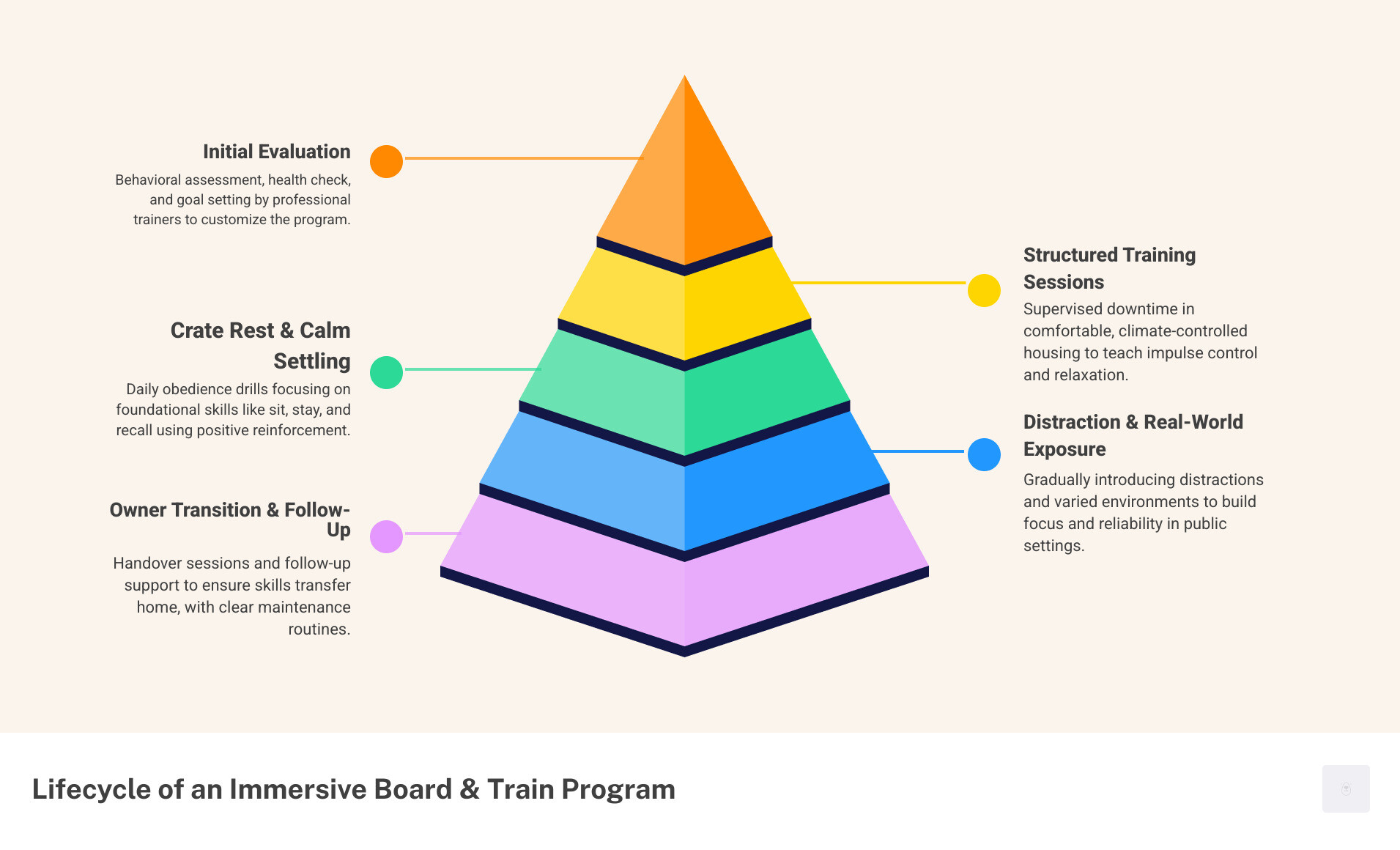
Intensive immersion programs represent a significant commitment to your dog’s development. Unlike drop-in classes, these programs place your dog in a structured environment where professional trainers manage their daily routine, social interactions, and learning sessions. The goal is to build foundational obedience in a setting free from the distractions of home, allowing the dog to focus entirely on learning new cues and behaviors.
When selecting a premier dog training facility, it is important to understand that the “boarding” aspect is just as critical as the “training.” A high-quality facility provides a home-like setting or climate-controlled, comfortable housing that reduces stress. In a tropical climate like Hawaii County, this means ensuring that outdoor exercise areas are well-shaded and that indoor spaces are properly ventilated. The curriculum typically includes a mix of formal training, crate rest, and supervised socialization, ensuring that the dog learns how to settle and remain calm even when they are not actively working.
What to Expect During Dog Training and Boarding Stays
The process usually begins with an initial evaluation to identify your dog’s specific needs, whether that is basic leash manners or more complex behavioral issues. Once the program begins, your dog will follow a consistent schedule. This consistency is the backbone of the program; by controlling the environment, trainers can prevent the practice of unwanted behaviors and reinforce desired ones consistently throughout the day. You should expect regular digital updates—many modern facilities use apps or direct messaging to share photos and progress reports, keeping you connected to your pet’s journey.
Program Durations and Investment Expectations
Programs are generally tiered based on the complexity of the goals. A two-week puppy program often focuses on early socialization, house training, and basic impulse control. A three-week basic program is designed for adult dogs needing a “reset” on obedience, while five-week intensive programs are typically reserved for advanced behavioral rehabilitation, such as addressing reactivity or fear-based behaviors. When evaluating these options, view the investment as a comprehensive package that covers not just the trainer's time, but the facility overhead, specialized equipment, and the dedicated care required to ensure your dog’s well-being during their stay.
Specializing Dog Training and Boarding for Puppies and Reactive Dogs
Puppy programs prioritize early exposure to new surfaces, sounds, and social cues to build confidence. For reactive dogs, the approach is vastly different. These programs focus on desensitization and counter-conditioning, using controlled environments to manage triggers. The trainer works to change the dog's emotional response to stressful stimuli, teaching them to check in with their handler instead of lunging or barking. This requires a high level of expertise and a focus on safety, ensuring that every interaction is a positive learning experience.
Comparing Immersive Boarding Programs to Alternative Training Formats
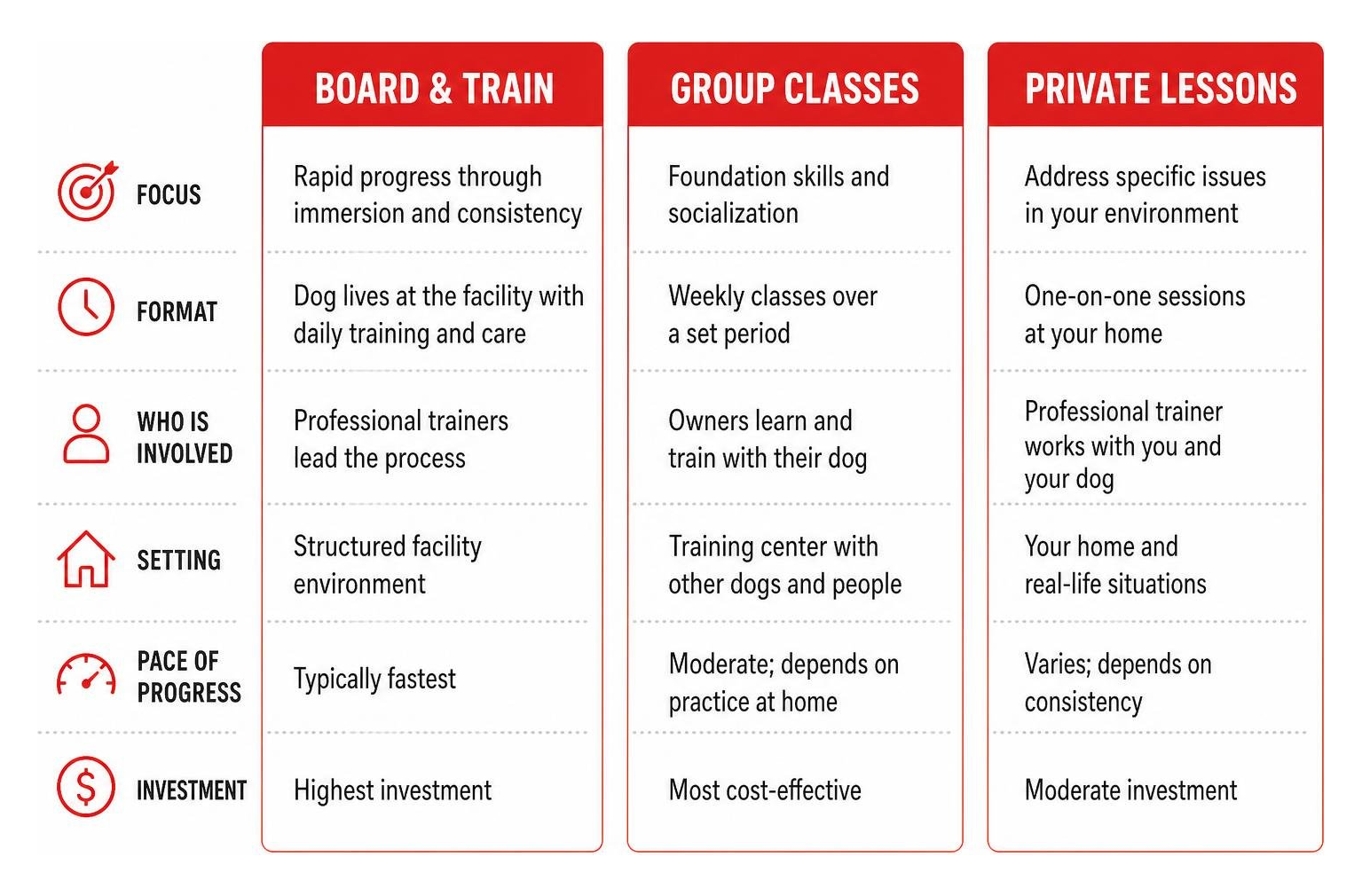
Choosing the right path depends on your lifestyle and your dog’s specific challenges. While board and train offers rapid progress, it is not the only way to achieve a well-behaved dog.
Group Classes and Private In-Home Instruction
Group classes are excellent for socialization and teaching your dog to listen to you amidst the presence of other dogs. They provide a cost-effective way to learn handler mechanics, though they require significant time and patience from the owner. Private in-home instruction, by contrast, allows a trainer to address specific household issues—like jumping on guests or bolting out the front door—in the exact environment where those problems occur.
Day Training and Virtual Behavioral Consultations
For owners who need professional help but prefer to keep their dog at home, day training or virtual consultations are powerful alternatives. Day training involves a trainer working with your dog during the day, while virtual consults provide you with the coaching needed to implement practical dog training programs yourself. These methods are ideal for busy schedules and allow you to remain the primary driver of your dog's progress.
Assessing Facility Safety, Standards, and Training Methodologies

Safety must be the primary filter through which you view any facility. A reputable center will be transparent about their methods, favoring positive reinforcement and humane, low-stress handling.
Evaluating Environment, Housing, and Daily Welfare
When visiting a facility, look beyond the training floor. Are the living areas clean and well-maintained? Is there adequate access to exercise? In Hawaii County, look for facilities that leverage the island's natural beauty with secure, lush outdoor play spaces that offer protection from the sun. A good facility will have a clear enrichment schedule, ensuring that your dog is mentally stimulated and physically comfortable throughout their stay.
Vetting Trainer Credentials and Local Directory Resources
Always ask about the trainer’s certifications and their approach to continuing education. A professional should be able to explain why they use certain techniques. Avoid any facility that makes “guaranteed” results; behavior is dynamic, and no one can predict a living animal's performance with 100% certainty.
Essential Questions to Ask Before Enrollment:
- What is the ratio of trainers to dogs?
- How are dogs housed, and how often are they let out for exercise?
- What specific methods are used if a dog struggles with a command?
- Can I see references or speak with a past client?
- How is the transition back to my home handled?
Overcoming Generalization Challenges and Maintaining Lifelong Skills
The most common hurdle for board and train graduates is the “generalization gap.” Dogs are context-dependent learners; they may listen perfectly to a trainer in a facility but revert to old habits at home. This is why the transition phase is the most important part of the process.
The Owner’s Role in Post-Program Skill Retention
Your behavior is the final piece of the puzzle. If you revert to old habits—such as inadvertently rewarding your dog for jumping or failing to be consistent with cues—the training will fade. You must be prepared to maintain the same standards, use the same language, and provide the same level of reinforcement that your dog received during their stay.
Structuring the Transition Home and Follow-Up Support
A quality program will always conclude with a “handover” session. This is where the trainer teaches you how to handle your dog. Look for programs that include follow-up lessons or virtual check-ins. These sessions are vital for troubleshooting issues as they arise in your home environment, ensuring that the skills your dog learned become a permanent part of their lifestyle.
Frequently Asked Questions About Dog Training
Why do some dogs struggle to replicate trained behaviors at home?
Dogs often associate specific behaviors with the environment where they learned them. If the layout of your home, the sounds, or even your own body language differs from the training facility, your dog may not realize the same rules apply. Consistent practice in different areas of your house helps bridge this gap.
What is the ideal age to enroll a puppy in an intensive program?
While puppies can begin learning basic manners as soon as they are fully vaccinated, intensive boarding programs are often best suited for puppies around 16 weeks or older. This ensures they have sufficient immunity and are developmentally ready for the structured nature of the program.
How can owners distinguish balanced, humane programs from outdated methods?
Look for trainers who focus on teaching the dog what to do, rather than just punishing what not to do. A humane program will be transparent about the equipment they use and will welcome your questions about their philosophy. If a trainer is unwilling to show you how they handle a dog, that is a significant red flag.
Conclusion
Choosing a training facility is an investment in your relationship with your pet. By carefully assessing the facility's environment, the trainer's methodology, and your own role in the ongoing process, you can ensure a successful outcome. Board and train is a jump-start, not a permanent fix; the true success of the program lies in the consistency and commitment you bring to your dog's life once they return home. With the right support and a clear plan, you can enjoy a lifetime of harmony and mutual respect with your companion.

Leave a Reply