Key Takeaways
- Dental implants can replace one tooth, several teeth, or an entire upper or lower row of teeth.
- The best option depends on jawbone, gum health, medical history, bite, goals, and budget.
- Treatment includes planning, placement, healing, a final restoration, and ongoing care.
- Early soreness often improves within days, but bone healing commonly takes months.
- Daily cleaning, dental visits, and avoiding tobacco help protect long-term results.
Why Tooth Replacement Deserves Careful Thought
A missing tooth can affect more than appearance. It may change chewing habits, speech, confidence, and the types of foods a person feels comfortable eating. For example, someone missing a back tooth may start avoiding apples, nuts, or steak because chewing feels uneven. Exploring dental implant options Catoosa OK, can help patients understand whether a fixed replacement may fit their needs.
Leaving a gap can also place added pressure on nearby teeth and the opposite tooth that no longer has a matching chewing surface. Replacing a tooth is, therefore, a functional oral health decision as well as a cosmetic one.
What A Dental Implant Does
A dental implant is a small post placed in the jawbone to replace the root of a missing tooth. It generally has three parts: the implant post below the gumline, an abutment that connects the post to the visible tooth, and a crown, bridge, or denture restoration. The bone gradually bonds with the post through a process called osseointegration, creating stable support for the replacement tooth.
Patients reviewing implant parts and healing stages can see why treatment timing varies from one case to another.
Common Implant Choices
- Single-tooth implant: One implant supports one custom crown, often without reshaping neighboring teeth.
- Implant-supported bridge: Two or more implants can support a bridge when several teeth in a row are missing.
- Implant-supported denture: A removable denture may snap onto implants for improved stability.
- Full-arch restoration: Several implants support a complete set of replacement teeth for people missing most or all teeth in an arch.
Who May Be A Good Candidate?
Good candidates usually have healthy gums or gum disease that can be treated, enough jawbone to support an implant, and a commitment to daily oral hygiene. Bone loss does not always rule out treatment, because grafting or other preparatory care may be appropriate.
Medical factors matter as well. Diabetes that is not well controlled, immune conditions, certain medications, teeth grinding, and tobacco use can affect healing or complication risk. Age alone does not determine candidacy. An in-person exam, dental imaging, and a full medical history are needed to determine whether implants are suitable.
What Happens During The Planning Visit?
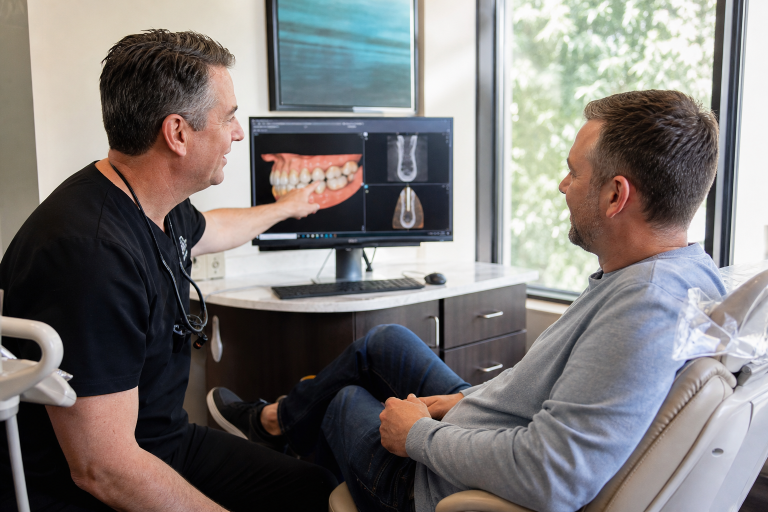
The dentist reviews dental and medical history, examines the teeth and gums, checks the bite, and may take X-rays or a 3D scan. This visit identifies infection, bone volume concerns, and whether extraction, gum treatment, or grafting should happen first. It is also the time to discuss temporary teeth, treatment length, restoration choices, and a written estimate.
The Dental Implant Process Step By Step
- Preparation: Gum disease, damaged teeth, infection, or bone loss is addressed first when needed.
- Placement: The implant post is placed in the jawbone with local anesthesia, with sedation options available in some cases.
- Early healing: Patients follow instructions for pain control, cleaning, activity, and a softer diet.
- Bone healing: The jawbone bonds with the implant over time.
- Final restoration: The abutment and custom crown, bridge, or denture are attached once healing is adequate.
- Follow-up: The dental team checks comfort, bite, gum health, and cleaning techniques.
Recovery: What Patients May Notice
Mild swelling, bruising, tenderness, and fatigue are common shortly after placement. Soft foods can make the first stage easier, but surface gum healing should not be confused with the deeper bone-healing process. Follow all instructions for medication, rinsing, brushing, and physical activity.
Contact the dental office promptly if you experience worsening pain, heavy bleeding, fever, increasing swelling, pus, or a loose implant or temporary tooth. These symptoms do not automatically mean treatment has failed, but they should be evaluated without delay.
How To Care For Dental Implants
- Brush twice daily with a soft-bristle toothbrush.
- Clean between teeth using floss, interdental brushes, or tools recommended for the restoration.
- Schedule regular exams and professional cleanings.
- Do not use teeth to open packages or bite very hard objects.
- Wear a night guard if clenching or grinding is a concern.
- Manage blood sugar and avoid smoking, vaping, and other tobacco products.
Implants Compared With Bridges And Dentures
- Dental implants: Often feel stable and do not rely on adjacent teeth, but require surgery, healing time, and a higher initial investment.
- Traditional bridges: May be completed faster and do not require implant surgery, but can require reshaping teeth beside the gap.
- Traditional dentures: Can replace many teeth and may be an option when bone is limited, but may shift, require removal for cleaning, and need adjustments over time.
Cost Questions To Ask
Ask whether the estimate includes the exam, scans, extraction, grafting, implant, abutment, crown, denture, temporary restoration, and follow-up visits. Insurance limits, annual maximums, waiting periods, financing, and health savings account eligibility can affect out-of-pocket costs. Compare the complete treatment plan, not just the price of the implant post.
Current Research And Technology
Digital impressions, 3D imaging, guided placement, and improved planning software can help clinicians visualize anatomy and plan implant positions. Technology supports clinical judgment but does not replace a careful exam or individualized treatment plan. Ongoing developments in implantology continue to examine materials, infection control, imaging, and long-term maintenance.
Common Questions About Dental Implants
Are Dental Implants Painful?
The procedure is performed with anesthesia. Soreness and swelling can occur afterward, but the dental team provides recovery instructions.
How Long Does Treatment Take?
Simple cases may take several months. Cases involving extractions, grafting, or complex restorations can take longer.
Can Smokers Get Dental Implants?
Tobacco can interfere with healing and raise the risk of complications. Stopping before treatment is often strongly recommended.
Do Dental Implants Look Natural?
Final restorations are selected to match the surrounding teeth in shape, size, and shade whenever possible.
How Long Do Dental Implants Last?
Implants can provide long-term service with consistent care, though crowns, bridges, and dentures may eventually need repair or replacement.
Conclusion
Dental implants can provide a stable way to restore comfort, chewing ability, and confidence after tooth loss. The right choice depends on oral health, overall health, goals, treatment timing, and budget. A thorough consultation makes it easier to compare implants with bridges and dentures, understand recovery expectations, and choose a plan that supports lasting oral health.

Leave a Reply