Table Of Contents
- Why Deep Cleaning Still Matters
- What To Do Before You Start
- The Best Cleaning Order
- Kitchen Deep-Cleaning Checklist
- Bathroom Deep-Cleaning Checklist
- Bedroom Deep-Cleaning Checklist
- Living Room Deep-Cleaning Checklist
- Whole-Home Tasks That Often Get Missed
- Cleaning, Sanitizing, And Disinfecting Safely
- How Often To Deep Clean
- When To Ask For Help
- Final Thoughts
A deep clean can make a Kennett Square home feel calmer, more comfortable, and easier to maintain, whether you are refreshing after a muddy season, preparing for guests, or simply catching up on areas that routine tidying misses. The key is not trying to do everything in one exhausting day. A room-by-room plan gives you a clear place to begin and a realistic way to finish. Breaking the work into manageable steps can also make it easier to stay consistent with household maintenance.
For households that need an extra set of hands, cleaning services Kennett Square, PA can be a practical option for move-related cleanups, post-project dust, or a detailed reset after a busy stretch. Whether you clean independently or hire help, starting with priorities keeps the process manageable. A clear plan can help ensure that high-use and often-overlooked areas receive the attention they need.
Why Deep Cleaning Still Matters
Routine cleaning handles the visible work: dishes, counters, laundry, and quick floor care. Deep cleaning reaches the buildup that collects around baseboards, under furniture, inside appliances, on vents, and in corners. A room may look neat while still harboring dust, crumbs, pet hair, soap residue, or kitchen grease in easy-to-overlook places.
Cleaning, sanitizing, and disinfecting are different tasks. In most homes, regular cleaning removes dirt and many germs from surfaces. The guidance for cleaning and disinfecting a home explains that disinfection is generally most useful when someone is sick or when a household member is at higher risk of illness.
What To Do Before You Start
Choose one room, or even one zone within a room, instead of treating the entire home as a single project. Remove clutter from floors, counters, shelves, and furniture first. Then gather microfiber cloths, a vacuum, a broom, brushes, gloves, and cleaners suited to the materials you will handle.
Open windows or improve airflow when product labels call for ventilation. Check care instructions before using cleaners on natural stone, finished wood, electronics, glass, or delicate upholstery. Keep pets and children away from open products and wet floors, and avoid moving heavy appliances or furniture without help.
The Best Cleaning Order
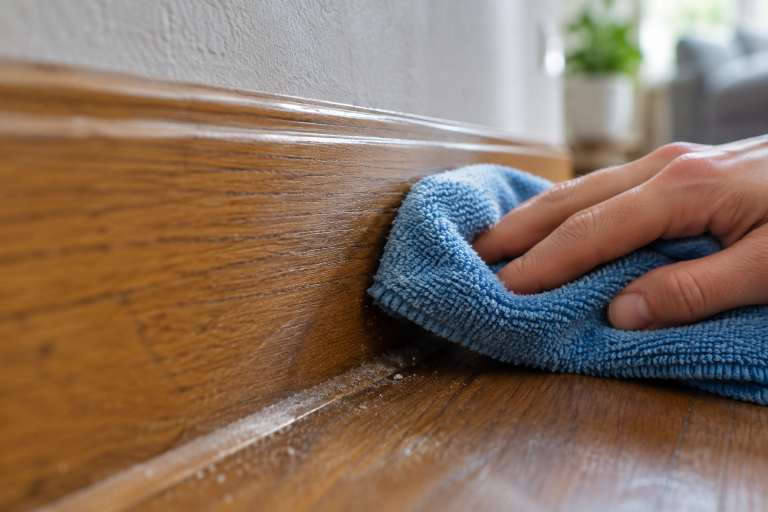
Work from high to low so dust and debris do not land on surfaces you have already cleaned. Begin with ceiling corners, fan blades, vents, and high shelves. Continue with walls, doors, furniture, counters, trim, and baseboards. Handle dry dust before sprays or water, then vacuum or mop the floor last. Moving in one direction around the room, such as clockwise from the doorway, helps prevent skipped spots.
Kitchen Deep-Cleaning Checklist
Kitchens need attention because food residue, moisture, and grease can collect quickly. Wipe cabinet fronts, handles, drawer faces, and the space above upper cabinets. Clean the microwave inside and out, degrease the stovetop and backsplash, and follow the appliance maker's directions for oven cleaning.
- Wash refrigerator shelves, drawers, door seals, and handles.
- Clean the sink, faucet, drain area, and nearby backsplash.
- Wipe the exterior of the range hood and any accessible filter components as directed.
- Clean under and behind movable appliances only when it is safe to do so.
- Wash the trash can, vacuum floor edges, and mop last.
Bathroom Deep-Cleaning Checklist
In bathrooms, focus on soap film, mineral deposits, and moisture-prone areas. Clean shower walls, tubs, doors, curtain liners, grout lines, vanity fronts, mirrors, towel bars, and light switches. Wash behind and around the toilet base, dust the exhaust fan cover, and launder bath mats or shower curtains when their care labels allow.
Check caulk and grout as you work. Cleaning can improve their appearance, but it will not repair cracks, loose material, or water damage.
Bedroom Deep-Cleaning Checklist
Wash bedding, pillow covers, and washable blankets according to their labels. Vacuum beneath the bed, along mattress edges, and inside closets before replacing stored items. Dust headboards, nightstands, lamps, blinds, window tracks, curtain rods, and baseboards. Clean pet beds when washable, and reduce the number of unused items on open surfaces to make weekly upkeep take less time.
Living Room Deep-Cleaning Checklist
Vacuum sofas, chairs, cushions, rugs, and the spaces beneath furniture. Dust frames, lamps, shelves, electronics, and decor with methods appropriate for each item. Wipe high-touch pieces such as remotes, switches, handles, and side tables. Wash removable throws and pillow covers, then finish with window ledges, blinds, baseboards, and floors.
Whole-Home Tasks That Often Get Missed
- Door frames, trim, switch plates, cabinet pulls, and stair railings.
- Light fixtures, ceiling-fan blades, accessible vent covers, and return grilles.
- Window tracks, sliding-door channels, wall corners, and spaces under movable furniture.
- Laundry baskets, reusable cleaning tools, pet feeding areas, and pet toys.
Cleaning, Sanitizing, And Disinfecting Safely
Always clean visibly dirty surfaces before sanitizing or disinfecting. Follow the product label, including directions for protective equipment, ventilation, dilution, and wet contact time. Never mix bleach with ammonia, acids, or other cleaning products. Keep products in their original containers and choose formulas made for the surface you are treating.
When disinfection is appropriate, select an EPA-registered disinfectant and use it exactly as directed. Stronger products are not automatically better, particularly around children, pets, or people with asthma and chemical sensitivities.
How Often To Deep Clean
Your ideal schedule depends on household size, pets, allergies, cooking habits, and available time. Use a flexible rhythm:
- Monthly: Address high-use rooms and visible buildup.
- Seasonally: Refresh fabrics, window tracks, closets, storage areas, and neglected corners.
- Before guests: Prioritize entryways, bathrooms, kitchens, and shared spaces.
- After illness, spills, or renovations: Add the cleaning steps that fit the situation.
When To Ask For Help
DIY deep cleaning works well when the job can be divided into short sessions. Professional help may be useful during a move, after renovations, or when detailed cleaning has been delayed for an extended period. Ask what rooms, surfaces, products, and add-on tasks are included before scheduling. Mold, pest activity, water damage, hazardous materials, and major appliance issues may require a qualified specialist rather than standard cleaning.
Final Thoughts
A successful deep clean is not about perfection. It is about choosing the areas that will make the biggest difference in your Kennett Square home, using safe methods, and building a routine you can repeat. Start with one room, finish it completely, and let steady progress create a fresher home.

Leave a Reply