Key Takeaways
- Start with a site-specific risk assessment before choosing guards, cameras, or access systems.
- Use layered protection that combines people, procedures, lighting, access control, communication, and technology.
- Make emergency responsibilities simple, visible, and easy for employees to follow.
- Review incidents, near misses, drills, and equipment failures to improve the plan over time.
High-risk sites need security plans that protect people, property, operations, and sensitive information without unnecessarily complicating routine work. A warehouse, medical office, retail location, construction site, multifamily property, financial business, or event venue may face very different concerns, but each needs clear priorities and practical safeguards.
Staffing decisions should follow the actual threat level, not assumptions. For example, armed security may be considered when a site faces elevated risks related to valuable assets, public conflict, restricted operations, or the need for a visible on-site response. California Patrol Enforcement is a Sacramento-area provider whose service page describes protection for people, property, and community settings, including financial institutions, residential communities, educational facilities, and cannabis businesses. Its stated focus on threat assessment, conflict resolution, and emergency response makes it a useful local example when comparing specialized staffing options.
Why Physical Security Planning Matters
A good plan supports everyday operations while reducing opportunities for theft, trespassing, violence, vandalism, and unauthorized access. Open public access, late-night hours, large crowds, isolated parking areas, valuable inventory, cash handling, and nearby crime concerns can all increase exposure. The goal is not one perfect barrier. It is several reasonable layers that work together.
Step One: Identify The Site's Main Risks
Begin with a walkthrough and an honest review of past problems. Identify who enters the site, when they arrive, which areas are public or restricted, and what assets would create the greatest loss if damaged, stolen, or disrupted. Review thefts, disputes, threats, safety incidents, after-hours access, employee concerns, and nearby conditions such as vacant buildings, busy roads, or poorly lit public spaces.
A structured review can prevent leaders from spending money on controls that do not address the real problem. The Security Assessment at First Entry from CISA offers a useful model for evaluating a facility's current posture, identifying vulnerabilities, and considering practical mitigation options.
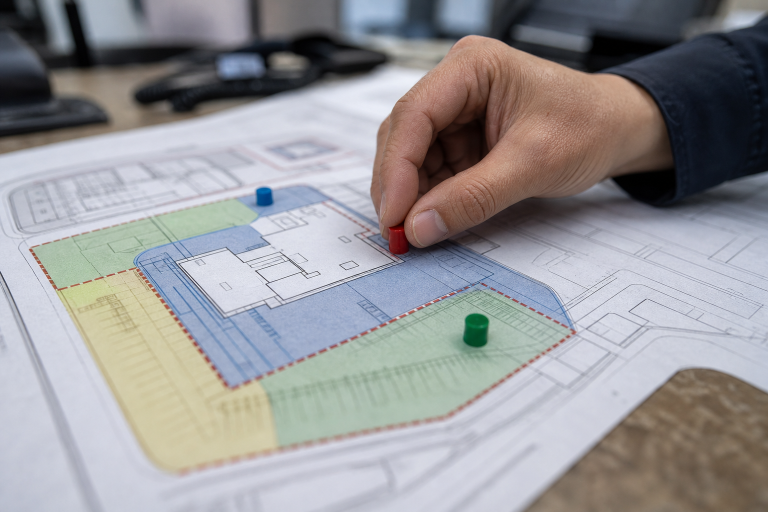
Step Two: Map The Property Into Security Zones
Divide the property into zones so each area receives the protection it actually needs:
- Outer zone: Property edges, sidewalks, fences, parking lots, loading areas, and delivery approaches.
- Entry zone: Doors, gates, reception desks, visitor check-in points, and shipping entrances.
- Controlled zone: Employee offices, stockrooms, cash-handling areas, server rooms, and staff-only spaces.
- Critical zone: High-value assets, sensitive records, hazardous materials, or essential equipment.
Each zone may need a different combination of lighting, signs, locks, cameras, patrols, identification checks, barriers, and visitor rules.
Step Three: Build Layers Instead Of Relying On One Control
A camera alone cannot stop unauthorized entry. A guard cannot see every blind spot. A locked door does not help if keys or access credentials are poorly managed. Layered security helps one control support for another.
- Visible boundaries, signs, fencing, and maintained exterior areas.
- Lighting for entrances, walkways, parking areas, and blind spots.
- Doors, gates, badges, locks, and visitor screening procedures.
- Cameras and alarms are positioned around actual risk points.
- Trained personnel, reliable communications, and response procedures.
Step Four: Match Personnel To The Actual Risk
Choose internal staff, unarmed officers, mobile patrols, remote monitoring, or a blended approach based on the seriousness and likelihood of threats. Consider public traffic, operating hours, site location, property value, access-control needs, and the need for deterrence or rapid response. Any staffing model must also align with applicable state licensing, training, reporting, and use-of-force requirements.
Step Five: Improve Entry And Visitor Procedures
Simple procedures often prevent avoidable access problems. Use one clearly marked public entrance when possible, keep employee-only doors closed, require visitor sign-in and temporary identification, confirm vendors and deliveries, and escort guests into sensitive areas. Review lost badges, spare keys, alarm codes, and access permissions regularly, especially after staffing changes.
Step Six: Use Technology With A Clear Purpose
Technology should solve a defined operational problem. Cameras can cover entrances, exits, parking areas, cash points, and loading zones. Access-control systems can limit entry by person, time, role, or location. Alarms can alert staff to forced entry, panic events, fire, or equipment failure. Every system needs an owner, a maintenance schedule, a response procedure, and a policy for retaining recorded information.
Step Seven: Create A Simple Emergency Action Plan
Emergency plans should answer five questions: What happened? Who has decision-making authority? How will people receive instructions? Where should they evacuate, shelter, or gather? When should emergency services be contacted?
Cover workplace violence, robbery, suspicious activity, fire, medical events, hazardous materials, severe weather, power loss, and communication failures. OSHA's emergency action plan guidance reinforces the need for clear reporting methods, evacuation routes, employee accountability, assigned responsibilities, and training.
Step Eight: Train Staff Without Creating Panic
Training should create calm, useful habits. Employees should know how to report suspicious behavior, respond to alarms, avoid escalating conflict, help visitors or people with disabilities, preserve useful information, and recognize when not to intervene directly. Provide short refreshers during onboarding, after site changes, and at regular intervals. Tabletop exercises and brief drills can test communication and decision-making without disrupting operations.
Step Nine: Measure Whether The Plan Works
Track meaningful indicators, including alarm response times, access-control issues, reported incidents, near misses, training completion, drill results, equipment failures, and unresolved corrective actions. The purpose is not to produce perfect numbers. It is to identify weak points, document improvements, and make better decisions.
Common Mistakes To Avoid
- Buying cameras without assigning someone to monitor alerts or review footage.
- Using the same plan for every location, shift, or type of operation.
- Ignoring employee feedback and minor incidents.
- Keeping outdated emergency contacts, floor plans, or access permissions.
- Relying on visible personnel while neglecting lighting, doors, alarms, and communications.
- Writing a plan so complex that employees cannot remember it during an emergency.
A 30-Day Action Plan For Business Leaders
- Days 1 to 5: Walk the property and identify access points, blind spots, hazards, and critical assets.
- Days 6 to 10: Review incident reports, employee concerns, vendor access, and emergency contacts.
- Days 11 to 15: Create security zones and rank risks by likelihood and consequence.
- Days 16 to 20: Select realistic improvements for staffing, lighting, access, cameras, alarms, and communication.
- Days 21 to 25: Update emergency procedures and assign clear responsibilities.
- Days 26 to 30: Train staff, run a short exercise, document gaps, and schedule the next review.
Questions Businesses Often Ask
Does Every High-Risk Site Need Armed Personnel?
No. The decision depends on the threat profile, operating hours, local requirements, insurance considerations, asset value, and response needs. A professional risk assessment should guide the choice.
How Often Should A Security Plan Be Reviewed?
Review it at least annually and after an incident, a renovation, a staffing change, a change in business use, or new threat information.
Can Technology Replace Security Personnel?
Technology improves awareness, but people are still needed to assess alerts, make decisions, document events, and coordinate a response.
Conclusion
A practical physical security plan does not need to be complicated. It needs to fit the site, address real risks, and give people clear actions to follow. With thoughtful assessment, layered safeguards, trained personnel, useful technology, and regular review, businesses can create safer and more resilient workplaces.

Leave a Reply